
2026.03.28
Intestine Epithelial Cells (IECs) form a critical, single-layered barrier lining the gut, directly interfacing with the luminal environment. This rapidly renewing epithelium, sustained by intestine stem cells, differentiates into multiple specific cell types. These include nutrient-absorbing enterocytes, mucin-secreting goblet cells, antimicrobial Paneth cells, and hormone-releasing enteroendocrine cells. Together, they perform essential functions in digestion, immune surveillance, and microbial defense. Due to these central roles, IECs are fundamental models for studying drug absorption, inflammatory bowel disease, infection, and for developing advanced intestine organoid systems. We provide high-quality, culture-ready animal intestine epithelial cells to support reliable in vitro intestine research and model development.
l Guaranteed High Post-thaw Viability (≥80%)
l Expandable & Culture-Ready Cells
l Customizable: Multiple Species & Sizes
A
B
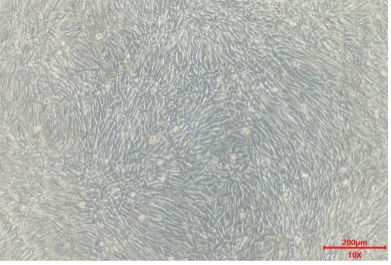
Figure 1. Morphology of Beagle Dog IECs post-thaw. (A) Day 1 post-thaw, showing typical cobblestone-like morphology. (B) Culture Day 3, forming a confluent monolayer with distinct cell polarity; cells are polygonal with homogeneous and transparent cytoplasm.
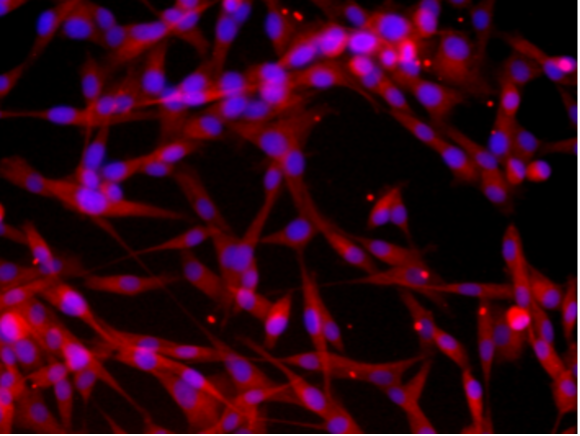
Figure 2: Overlaid fluorescent image of Beagle Dog IECs. The cultured cells were stained for ZO-1 (red). The nuclei were counterstained with DAPI (blue).
Cat. No. | Product Description | Size |
SD900-05 | SD Rat Intestine Epithelial Cells | 0.5 million |
CD900-05 | CD-1 Mouse Intestine Epithelial Cells | 0.5 million |
BA900-05 | BALB/c Mouse Intestine Epithelial Cells | 0.5 million |
BD900-05 | Beagle Dog Intestine Epithelial Cells | 0.5 million |
CY900-05 | Cynomolgus Monkey Intestine Epithelial Cells | 0.5 million |
BM900-05 | Bama Minipig Intestine Epithelial Cells | 0.5 million |